 |
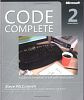
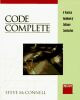
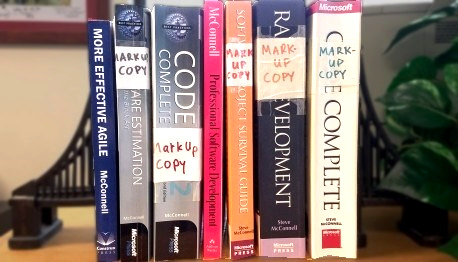
Code Complete: A Practical Handbook of Software
Construction. Redmond, Wa.: Microsoft Press, 880 pages,
1993. Retail price: $35. ISBN: 1-55615-484-4.
Buy
Code Complete from Amazon.com. |
16.1 Using gotos
Computer scientists are zealous in their beliefs, and when the discussion turns to gotos,
they get out their jousting poles, armor, and maces, mount their horses, and charge
through the gates of Camelot to the holy wars.
No one quarrels with using gotos to emulate structured constructs in languages
that don't support structured control constructs directly. The debate is about languages
that support structured constructs, in which gotos are theoretically not needed.
Here's a summary of the points on each side.
The Argument Against gotos
The general argument against gotos is that code without gotos is
higher-quality code. The famous letter that sparked the original controversy was Edsger
Dijkstra's "Go To Statement Considered Harmful" in the March 1968 Communications
of the ACM. Dijkstra observed that the quality of a programmer's code was inversely
proportional to the number of gotos the programmer used. In subsequent work,
Dijkstra has argued that code without gotos can more easily be proven correct.
Code containing gotos is hard to format. Indentation should be used to show
logical structure and gotos have an effect on logical structure. Trying to use
indentation to show the logical structure of a goto, however, is difficult or
impossible.
Use of gotos defeats compiler optimizations. Some optimizations depend on a
program's flow of control remaining within a few statements. An unconditional goto
makes the flow harder to analyze and reduces the ability of the compiler to optimize it.
Thus, even if introducing a goto produces an efficiency at the source-language
level, it may well reduce overall efficiency by thwarting compiler optimizations.
Proponents of gotos sometimes argue that they make code faster or smaller. But
code with gotos is rarely the fastest or smallest possible. Donald Knuth's
marvelous article, "Structured Programming with go to Statements," gives several
examples of cases in which using gotos is slower and larger (Knuth 1974).
In practice, use of gotos tends to violate structured programming principles.
Even if gotos aren't confusing when used carefully, once gotos are allowed,
they spread through the code like termites in a rotting house and aren't used carefully.
If any gotos are allowed, the bad creep in with the good, so it's better not to
allow any of them.
Overall, in the two decades since publication of Dijkstra's original letter, experience
has shown the badness of goto-laden code. In a survey of the literature, Ben
Shneiderman concluded that the evidence supports the badness of the goto
(Shneiderman 1980).
The Argument for gotos
The argument for the goto is characterized by advocating its use in specific
circumstances rather than its indiscriminate use. Most arguments against gotos are
based on indiscriminate use, rather than careful use. The goto controversy began
when Fortran was the most popular language. Fortran lacked any presentable loop
structures, and, in the absence of any good advice on programming structured loops with gotos,
programmers wrote a lot of spaghetti code. Such code undoubtedly was correlated with low
quality programs but has little to do with careful use of a goto to make up for a
gap in a structured language's capabilities.
A well-placed goto can eliminate duplicate code. Duplicate code leads to
problems with the two sets of code being modified differently. It increases the size of
source and executable files. The bad effect of the goto is outweighed in such a
case by the worse effect of duplicate code.
The gotos is useful in a routine that allocates resources, performs operations
on those resources, then deallocates the resources. With gotos, you can cleanup in
one section of code, and they reduce the danger of forgetting to deallocate the resources
in each place you detect an error.
In some cases, gotos can result in faster and smaller code. Knuth's marvelous
1974 article cited a few cases in which gotos produce a legitimate gain (Knuth
1974).
Good programming doesn't mean eliminating gotos. Methodical decomposition,
refinement, and selection of control structures automatically leads to goto-free
programs in most cases. gotolessness is not the aim, but the outcome, and putting
the focus on no gotos isn't helpful.
Two decades worth of research with gotos has been inconclusive in demonstrating
their badness. In a survey of the literature, B. A. Sheil concluded that unrealistic test
conditions, poor data analysis, and inconclusive results failed to support the claim that
the number of bugs was proportional to the number of gotos (Sheil 1981). That
criticism applies to Shneiderman's survey of the literature, cited in the argument against
gotos, as well as other studies. Sheil did not conclude that gotos were
good, rather that experimental evidence against them was not conclusive.
Finally, goto was included as part of the Ada language, the most carefully
engineered programming language in history. Ada was developed long after both sides of the
goto debate were fully developed, and, after considering all sides of the issue,
included the goto.
The Phony goto Debate
The primary feature of most goto discussions is a shallow approach to the
question. People on the "gotos are evil" side usually present a trivial
code fragment that uses gotos, then show how easy it is to rewrite the code
fragment without gotos. This proves mainly that it's easy to write trivial code
without gotos. On the other hand, people on the "I can't live without gotos"
side usually present a case in which eliminating a goto results in an extra
comparison or two lines of duplicated code. The significance of the gain is questionable,
and this proves mainly that there's a case in which using a goto results in one
less comparison, rarely a significant gain on today's computers.
Most textbooks don't help since they merely provide a trivial example of rewriting code
without a goto and think they're done. Here's an example of a trivial piece of code
from such a textbook:
Pascal Example of Code that's Supposed to be Easy to Rewrite Without gotos
repeat
GetData( InputFile, Data );
if eof( InputFile ) then
goto LOOP_EXIT;
DoSomething( Data );
until ( Data = -1 );
LOOP_EXIT:
The book quickly replaces this with gotoless code:
Pascal Example of Supposedly Equivalent Code, Rewritten Without gotos
GetData( InputFile, Data );
while ( not eof( InputFile ) and ( Data <> -1 ) do
begin
DoSomething( Data );
GetData( InputFile, Data )
end;
This "trivial" example is disguised because it contains an error. In the case
in which Data equals -1, the translation detects the -1 and exits the
loop before executing DoSomething(). The original code executes DoSomething()
before the -1 is detected. In other words, a programming book trying to show how
easy coding is using only structured programming techniques translated its own example
incorrectly! The author of that book shouldn't feel too bad, however, because other books
make similar mistakes! Even the pros have difficulty achieving gotoless nirvana.
Here's a faithful translation of the code with no gotos:
Pascal Example of Truly Equivalent Code, Rewritten Without gotos
repeat
GetData( InputFile, Data );
if ( not eof( InputFile )) then
DoSomething( Data );
until ( Data = -1 or eof( InputFile ) );
Even with a correct translation of the code, the debate is still phony because it
trivializes the case in which a goto is needed. Cases like this are not the ones in
which thoughtful programmers choose a goto as the preferred form of control.
It would be hard by now to add anything worthwhile to the theoretical debate about gotos.
One level of discussion isn't usually addressed, however, and that's the situation in
which a programmer who is fully aware of gotoless alternatives chooses to use a goto
on the basis of its readability and maintainability.
The following sections present cases in which some experienced programmers argue for
using gotos. The sections provide examples of rewriting the code without gotos,
and discuss the tradeoffs between the various versions.
Error Processing and gotos
Writing highly interactive code creates additional programming demands. In particular,
it demands that you pay a lot of attention to error processing and cleaning up resources
when errors occur. Here's an example of code that purges a group of files. It first gets a
group of files to purge, then finds each file, opens it, overwrites it, and erases it. It
checks for errors at each step:
Pascal Example of Code with gotos that Processes Errors and Cleans up Resources
PROCEDURE PurgeFiles( var ErrorState: ERROR_CODE );
{ This routine purges a group of files }
var
FileIndex: Integer;
FileHandle: FILEHANDLE_T;
FileList: FILELIST_T;
NumFilesToPurge: Integer;
label
END_PROC;
begin
MakePurgeFileList( FileList, NumFilesToPurge );
ErrorState := Success;
FileIndex := 0;
while ( FileIndex < NumFilesToPurge ) do
begin
FileIndex := FileIndex + 1;
if not FindFile( FileList[ FileIndex ], FileHandle ) then
begin
ErrorState := FileFindError;
goto END_PROC
end;
if not OpenFile( FileHandle ) then
begin
ErrorState := FileOpenError;
goto END_PROC
end;
if not OverwriteFile( FileHandle ) then
begin
ErrorState := FileOverwriteError;
goto END_PROC
end;
if Erase( FileHandle ) then
begin
ErrorState := FileEraseError;
goto END_PROC
end
end; { while }
END_PROC:
DeletePurgeFileList( FileList, NumFilesToPurge )
end; { PurgeFiles }
This routine is typical of circumstances in which experienced programmers select a goto.
Other, similar cases occur when a routine needs to allocate and clean up resources such as
memory or handles to fonts, windows, brushes, and printers. The alternative to gotos
in those cases is usually duplicating code to clean up resources. In such cases, a
programmer might balance the evil of the goto against the maintenance headache of
duplicate code and decide that the goto is the lesser evil.
You can rewrite the above routine in a couple of ways that avoid gotos, and you
make tradeoffs in both cases. Here are the possible rewrite strategies:
Rewrite with Nested if Statements. To rewrite with nested if
statements, nest the if statements so that each is executed only if the previous
test succeeds. This is the standard, textbook, structured-programming approach to
eliminating gotos. Here's a rewrite of the routine using the standard approach:
Pascal Example of Code that Avoids gotos by using Nested ifs
PROCEDURE PurgeFiles( var ErrorState: ERROR_CODE );
{ This routine purges a group of files }
var
FileIndex: Integer;
FileHandle: FILEHANDLE_T;
FileList: FILELIST_T;
NumFilesToPurge: Integer;
begin
MakePurgeFileList( FileList, NumFilesToPurge );
ErrorState := Success;
FileIndex := 0;
while ( FileIndex < NumFilesToPurge and ErrorState = Success ) do
begin
FileIndex := FileIndex + 1;
if FindFile( FileList[ FileIndex ], FileHandle ) then
begin
if OpenFile( FileHandle ) then
begin
if OverwriteFile( FileHandle ) then
begin
if not Erase( FileHandle ) then
begin
ErrorState := FileEraseError
end
end
else { couldn't overwrite file }
begin
ErrorState := FileOverwriteError
end
end
else { couldn't open file }
begin
ErrorState := FileOpenError
end
end
else { couldn't find file }
begin
ErrorState := FileFindError
end
end; { while }
DeletePurgeFileList( FileList, NumFilesToPurge )
end; { PurgeFiles }
For people used to programming without gotos, this code might be easier to read
than the goto version, and if you use it, you won't have to face an inquisition
from the goto goon squad.
The main disadvantage of this approach is that the nesting level is deep. Very deep.
Deeeeeeeep. With nesting like this, to understand the code, you have to keep the whole set
of nested ifs in your mind at once. Moreover, the distance between error-processing
code and code that invokes it is too far: the code that sets ErrorState to FileFindError,
for example, is 23 lines from the if statement that invokes it.
With the goto version, no statement is more than four lines from the condition
that invokes it. Moreover, it doesn't require that you keep the whole structure in your
mind at once. You can essentially ignore any preceding conditions that were successful and
focus on the next operation. For these reasons, in this case, the goto version is
more readable and more maintainable than the nested-if version.
Rewrite with a Status Variable. To rewrite with a status variable (also called a
state variable), create a variable that indicates whether the routine is in an error state
or not. In this case, the routine already uses the ErrorState status variable, so
you can use that:
Pascal Example of Code that Avoids gotos by Using a Status Variable
PROCEDURE PurgeFiles( var ErrorState: ERROR_CODE );
{ This routine purges a group of files }
var
FileIndex: Integer;
FileHandle: FILEHANDLE_T;
FileList: FILELIST_T;
NumFilesToPurge: Integer;
begin
MakePurgeFileList( FileList, NumFilesToPurge );
ErrorState := Success;
FileIndex := 0;
while ( FileIndex < NumFilesToPurge ) and ( ErrorState = Success ) do
begin
FileIndex := FileIndex + 1;
if not FindFile( FileList[ FileIndex ], FileHandle ) then
begin
ErrorState := FileFindError
end;
if ( ErrorState = Success ) then
begin
if not OpenFile( FileHandle ) then
begin
ErrorState := FileOpenError
end
end;
if ( ErrorState = Success ) then
begin
if not OverwriteFile( FileHandle ) then
begin
ErrorState := FileOverwriteError
end
end;
if ( ErrorState = Success ) then
begin
if not Erase( FileHandle ) then
begin
ErrorState := FileEraseError
end
end
end; { while }
DeletePurgeFileList( FileList, NumFilesToPurge )
end; { PurgeFiles }
The advantage of the status-variable approach is that it avoids the deeply nested if-then-else
structures of the first rewrite, so it's easier to understand. It also places the action
following the if-then-else test closer to the test than the first rewrite and
completely avoids else clauses.
Understanding the nested-if version requires substantial mental gymnastics, but
this version is easier to understand because it closely models the way people think about
the problem. You find the file. If everything is OK, you open the file. If everything is
still OK, you overwrite the file. If everything is still OK, ...
The disadvantage of this approach is that the using status variables isn't as common a
practice as it should be. Document it carefully, or some programmers might not understand
the general approach. In this example, the use of well-named enumerated types helps
significantly.
Comparison of Approaches
Each of the three methods has something to be said for it. The first avoids unnecessary
tests and deep nesting but has gotos. The second avoids gotos but is deeply
nested and gives an exaggerated picture of the logical complexity of the routine. The
third avoids gotos and deep nesting but introduces extra tests.
The last approach is slighty preferable to the first two because it's more readable and
models the problem better, but that doesn't make it the best approach in all
circumstances. Any of these techniques works well when applied consistently to all the
code in a project. Consider all the factors that have been presented, then make a
project-wide decision about which method to favor in your programs.
gotos and Sharing Code in an else Clause
One challenging case in which some programmers would use a goto is the case in
which you have two conditional tests and an else clause, and want to execute code
in one of the conditions and the other else clause. Here's an example of a case
that could drive someone to goto:
C Example of Sharing Code in an else Clause with a goto
if ( StatusOK )
{
if ( DataAvail )
{
ImportantVar = x;
goto MID_LOOP;
}
}
else
{
ImportantVar = GetVal();
MID_LOOP:
/* lots of code */
...
}
This is a good example because it's logically tortuous-it's nearly impossible to read
as it stands and one of the hardest cases to rewrite correctly without a goto. If
you think you can easily rewrite it without gotos, ask someone to review your code!
Several expert programmers have rewritten it erroneously.
You can rewrite it in several ways. You can duplicate code, put the common code in a
routine and call it from two places, or retest the conditions. The rewrite won't be as
fast as the original in most languages, but it will be almost as fast. Unless the code is
in a really hot loop, rewrite it without thinking about efficiency.
The best rewrite is to put the /* lots of code */ part in its own routine. You
can then call the routine in the places you would otherwise have used as the origin or
destination of a goto and preserve the original structure of the conditional.
Here's how it looks:
C Example of Sharing Code in an else Clause by Putting Common Code in a Routine
if ( StatusOK )
{
if ( DataAvail )
{
ImportantVar = x;
DoLotsOfCode( ImportantVar );
}
}
else
{
ImportantVar = GetVal();
DoLotsOfCode( ImportantVar );
}
Normally, writing a new routine (or a macro in C) is the best approach. Sometimes,
however, it's not practical to put duplicated code in its own routine. In this case you
can work around it by restructuring the conditional so that you keep the code in it rather
than in a new routine. Here's how it looks:
C Example of Sharing Code in an else Clause Without a goto
if ( (StatusOK && DataAvail) || ! StatusOK )
{
if ( StatusOK && DataAvail )
ImportantVar = x;
else
ImportantVar = GetVal();
/* lots of code */
...
}
This is a faithful and mechanical translation of the logic in the goto version.
It tests StatusOK two extra times and DataAvail one, but the code is
equivalent. If retesting the conditionals bothers you, notice that the value of StatusOK
doesn't need to be tested twice in the first if test. You can also drop the test
for DataAvail in the second if test. Try rewriting it yourself if you want
the practice.
Summary of Guidelines for Using gotos
Use of gotos is a matter of religion. My dogma is that in modern languages, you
can easily replace nine out of ten gotos with equivalent structured constructs. In
these simple cases, you should replace gotos out of habit. In the hard cases, you
can still exorcise the goto in nine out of ten cases. In these cases, you can break
the code into smaller routines; use nested ifs; test and retest a status variable;
or restructure a conditional. Eliminating the goto is harder in these cases, but
it's good mental exercise, and the techniques discussed in this section give you the tools
to do it.
In the remaining one case out of 100 in which a goto is a legitimate solution to
the problem, document it clearly and use it. If you have your rain boots on, it's not
worth walking around the block to avoid a mud puddle. But keep your mind open to gotoless
approaches suggested by other programmers. They might see something that you don't.
Here's a summary of guidelines for using gotos:
- Use gotos to emulate structured control constructs in languages that don't
support them directly. When you emulate structured constructs, emulate them exactly. Don't
abuse the extra flexibility the goto gives you.
- Don't use gotos when an equivalent structured construct is available.
- Measure the performance of any goto used to improve efficiency. In most cases
that use gotos, you can recode them without gotos with improved readability
and no loss in efficiency. If your case is the exception, document the efficiency
improvement so that gotoless evangelists won't remove it when they see it.
- Limit yourself to one goto label per routine, unless you're emulating structured
constructs.
- Limit yourself to gotos that go forward, not backward, unless you're emulating
structured constructs.
- Make sure all goto labels are used. They might be a symptom of missing code,
namely the code that goes to them. If they're not used, delete them.
- Make sure a goto doesn't create unreachable code.
- If you're a manager, adopt the perspective that a battle over a single goto isn't
worth the loss of the war. If the programmer is aware of the alternatives and is willing
to argue, the goto is probably OK.
Further Reading
These articles contain the whole goto debate. It erupts from time to time in
most workplaces, textbooks, and magazines, but you won't hear anything that wasn't fully
explored 20 years ago.
Dijkstra, E. "GOTO Statement Considered Harmful," Communications of the
ACM, v. 11, no. 3, March 1968, pp. 147-8. This is the classic paper in which Dijkstra
put the match to the paper and ignited a controversy that shows no signs of abating.
Wulf, W. A. "A Case Against the GOTO," Proceedings of the 25th National
ACM Conference, August 1972, pp. 791-97. This paper was another argument against the
indiscriminate use of gotos. Wulf argued that if programming languages provided
adequate control structures, gotos would become largely unnecessary. Since the
paper was written in 1972, languages such as Pascal, C, and Ada have proven him correct.
Knuth, Donald. "Structured Programming with go to Statements," 1974, in
(Yourdon 1979), pp. 259-321. This long paper isn't entirely about gotos, but it
includes a horde of examples of code that's made more efficient by eliminating gotos
and another horde of examples of code that's made more efficient by adding them.
Rubin, Frank. "'GOTO Considered Harmful' Considered Harmful" (letter to the
editor), Communications of the ACM, vol. 30, no. 3 (March 1987), pp. 195-6. In this
rather hot-headed letter to the editor, Rubin asserts that gotoless programming has
cost businesses "hundreds of millions of dollars." He then offers a code
fragment that uses a goto and argues that it's superior to gotoless
alternatives.
The response that the letter generated was more interesting than the letter itself. For
five months, the CACM published letters that offered different versions of Rubin's
original 7-line program. The letters were evenly divided between those defending gotos
and those castigating them. Readers suggested roughly 17 different rewrites, and the
rewritten code fully covered the spectrum of approaches to avoiding gotos. The
editor of Communications of the ACM noted that the letter had generated more
response by far than any other issue ever considered in pages of the CACM.
For the follow-up letters, see:
Communications of the ACM, vol. 30, no. 5 (May 1987), pp. 351-355.
Communications of the ACM, vol. 30, no. 6 (June 1987), pp. 475-478.
Communications of the ACM, vol. 30, no. 7 (July 1987), pp. 632-4.
Communications of the ACM, vol. 30, no. 8 (August 1987), pp. 659-62.
Communications of the ACM, vol. 30, no. 12 (December 1987), pp. 997, 1085.
This material is Copyright © 1993 by Steven C. McConnell. All
Rights Reserved.
|